

Mantodea, explained. Research beyond the breeding log.

Plates, not posts
Mantodea.lab is the work of Eliseo Candela, an independent researcher in the taxonomy and natural history of praying mantises. The project covers the whole order Mantodea — from flower and orchid mantises to bark, grass and stick-like species — with a special focus on the family Toxoderidae: the long-necked, leaf-legged Toxodera and their relatives.
Every plate here is built like a page from a monograph: real specimens, photographed and measured, with the literature behind them. Some review new papers; others come straight from the cabinet and the breeding room, and ask questions the papers have not answered yet.
Taxonomy, morphology, captive breeding and outreach — the aim is simple: to make mantises better known, and better described.
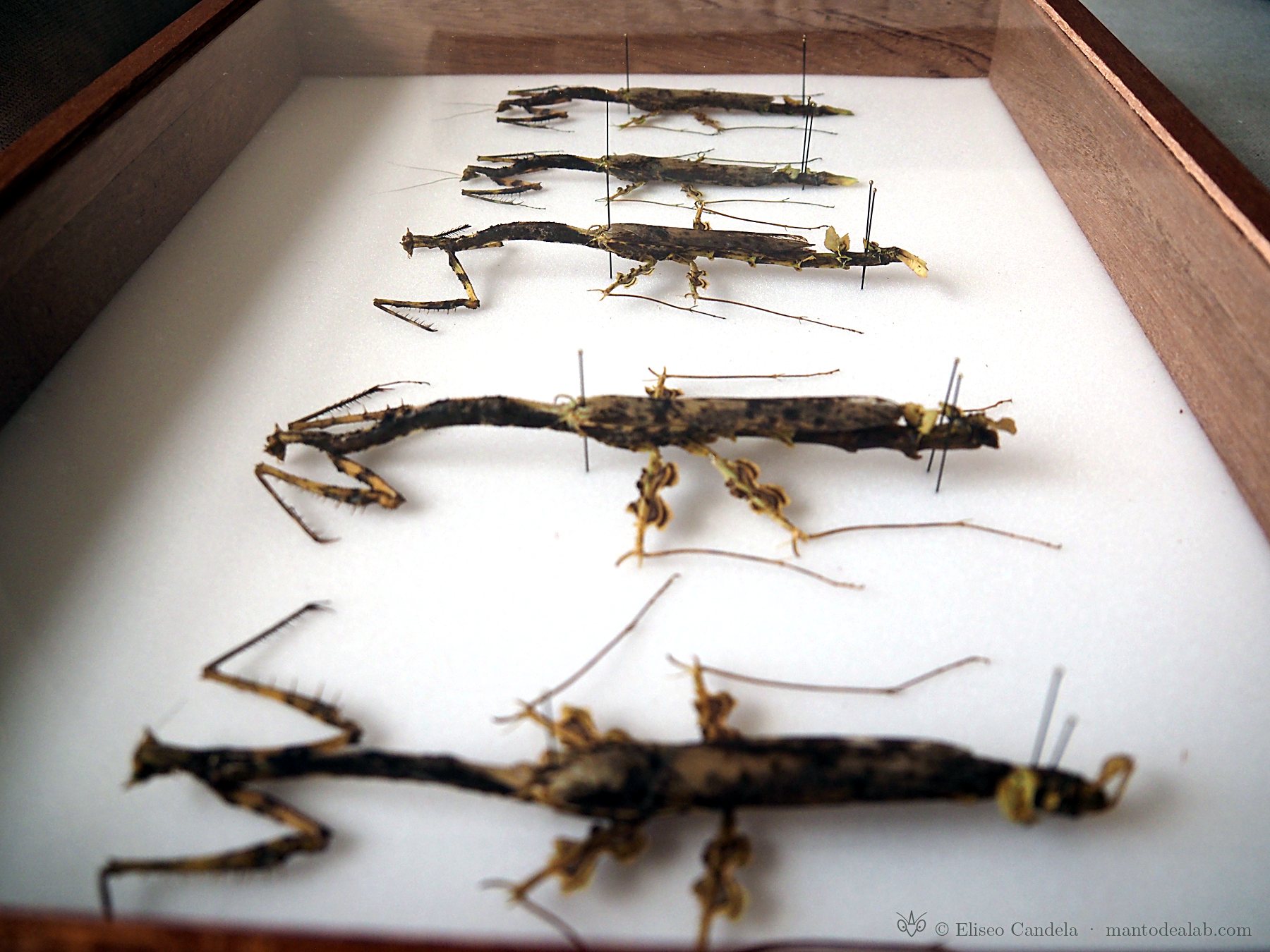
Toxoderini — Series I
Each species comes as a set of three A4 sheets, with photographs and data of the species, from specimens photographed in the lab. Printed and signed by hand on laid paper, in two editions: a 120 g study edition and a heavy 300 g collector edition.


Preview images · the final three-sheet sets are in preparation.
- T. beieri
- T. denticulata
- T. fimbriata
- T. hauseri
- T. integrifolia
- T. maculata
- T. maxima
- P. borneana
- P. cornicollis
- P. gigliotosi
- P. meggitti
- P. polyacantha
- S. pluto
- S. porioni
- M. subparallela
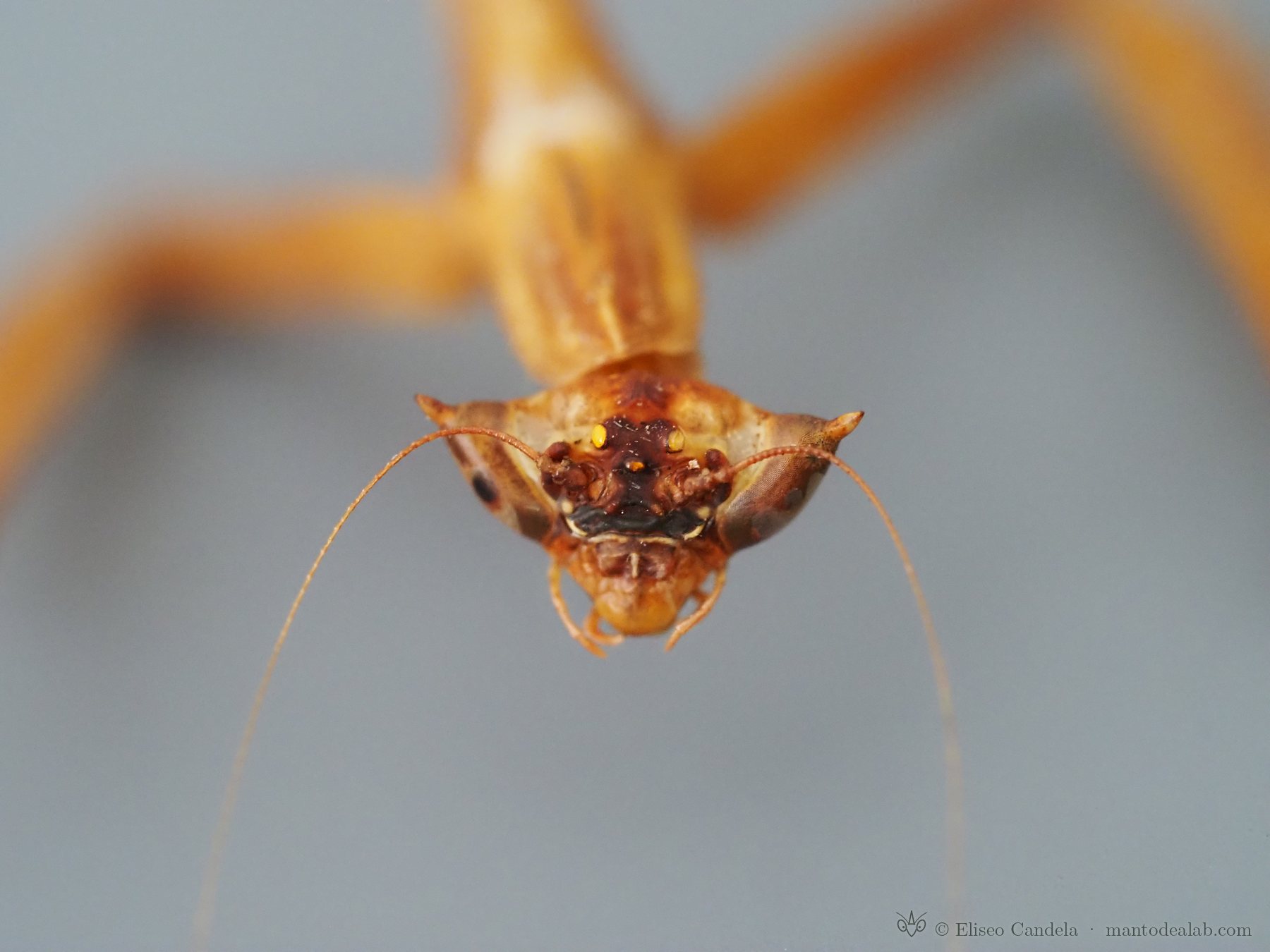
Breeding Toxodera
A field-to-ootheca guide written from captive generations and measured data, not forum lore. Setup, feeding by instar, moults, mating, the ootheca and its pedicel, incubation and the fragile first instars.
- Knowing Toxodera
- Enclosure and climate
- Feeding by instar
- Moults
- Sexing and maturity
- Mating
- The ootheca
- Incubation
- Nymphs L1–L3
- Troubleshooting
- Breeding log
Scientific consulting & species ID
Scientific consulting in Mantodea taxonomy for collectors, breeders, museums and researchers — from a first identification to a published description.
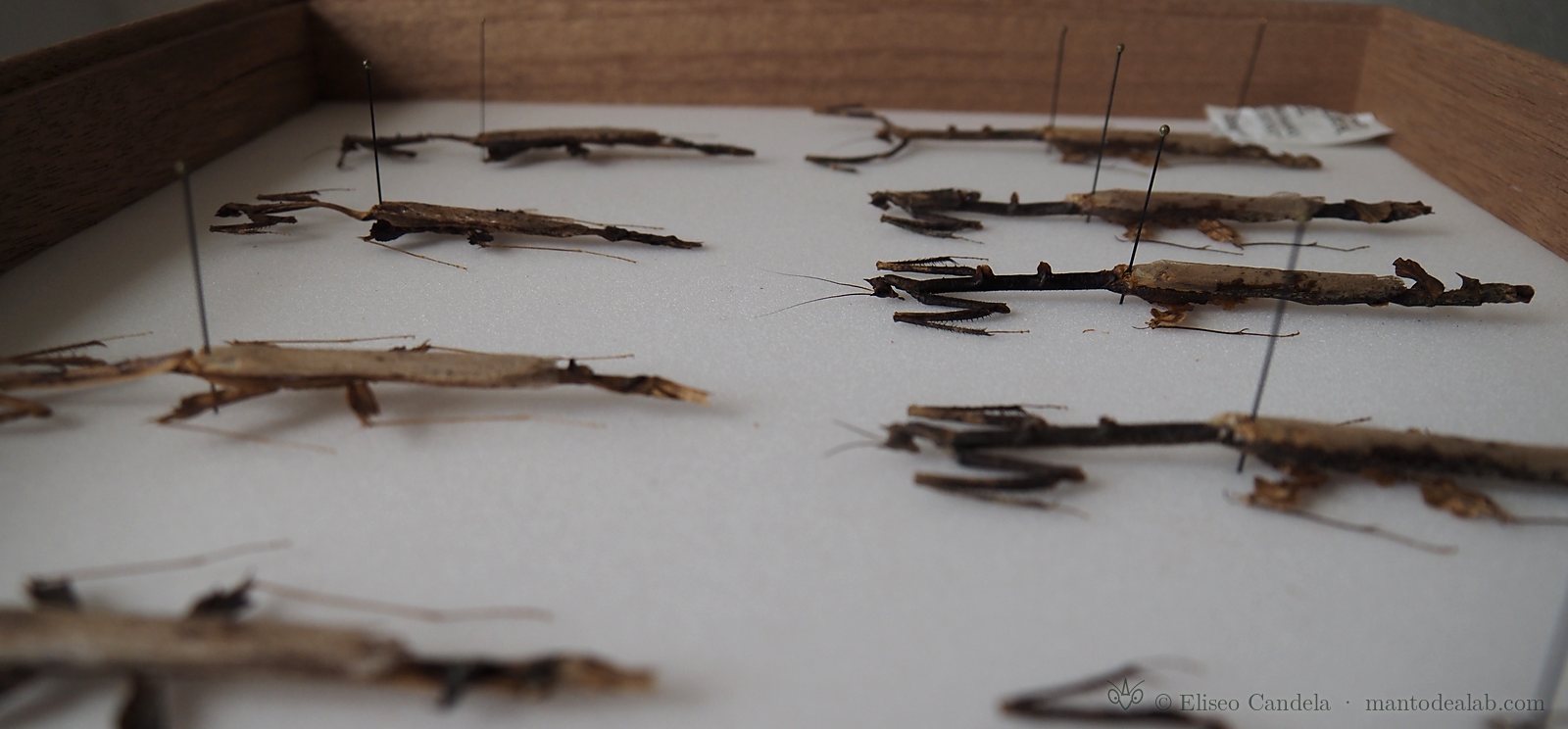
Taxonomic identification
Identification of specimens from photographs or material, compared against the original descriptions, keys and type literature. If something does not fit any known species, we assess whether it may be new to science.
Species description
Guidance on writing the description of a new species: diagnosis, comparison with related taxa, terminology, measurements, nomenclature and figures.
Publication support
Support throughout the scientific paper: structure and review of the manuscript, choice of journal, submission and replies to reviewers.
Talks & workshops
Talks on mantises and insect diversity for schools, associations, museums and natural history societies, and hands-on workshops on collecting, preparation and identification. In Spanish or English.
Specimen preservation & museum mounting
Careful hands for fragile insects. Preparation of mantises and other insects to museum standard, and repair of specimens damaged in transit or by time.
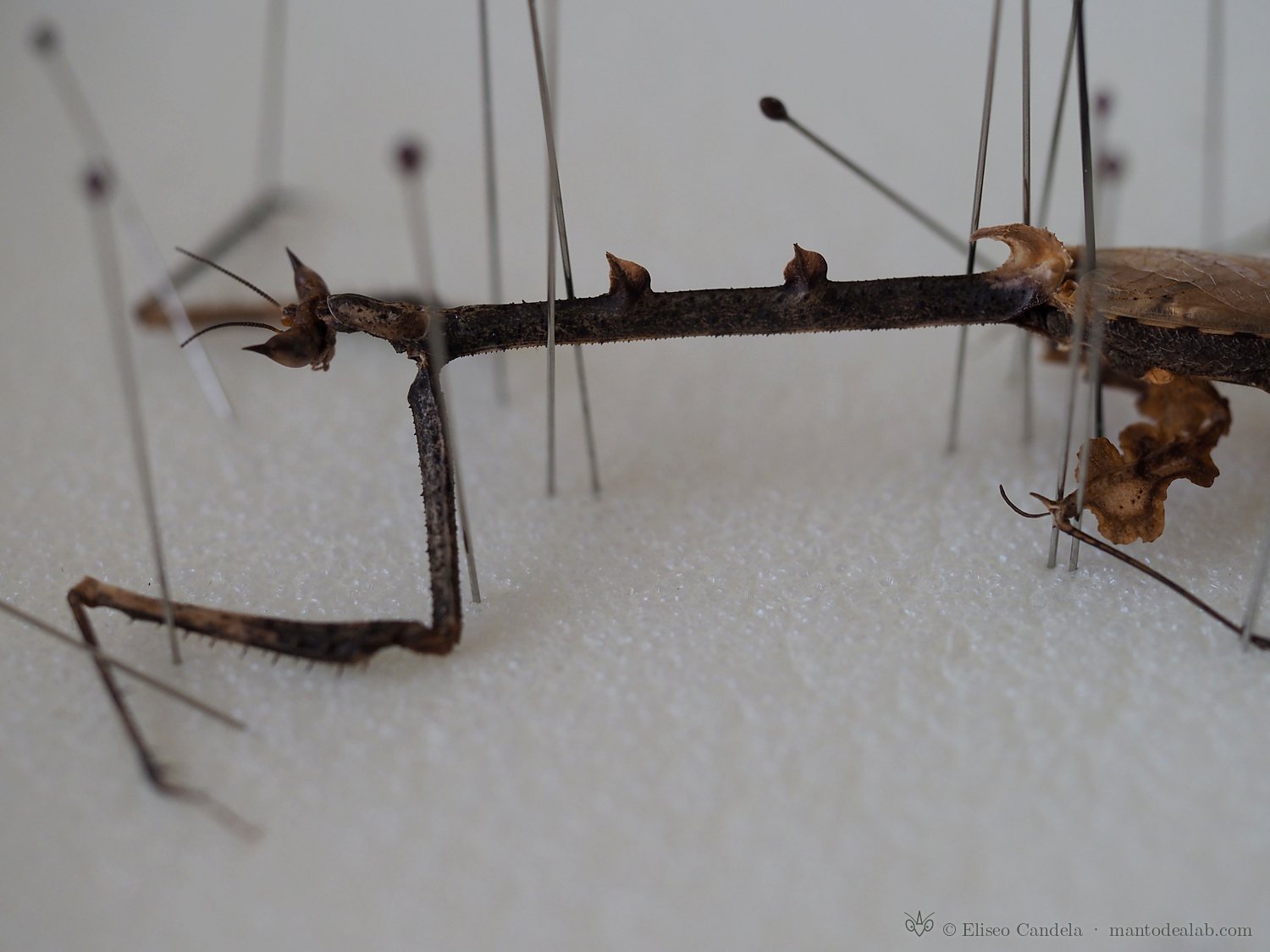
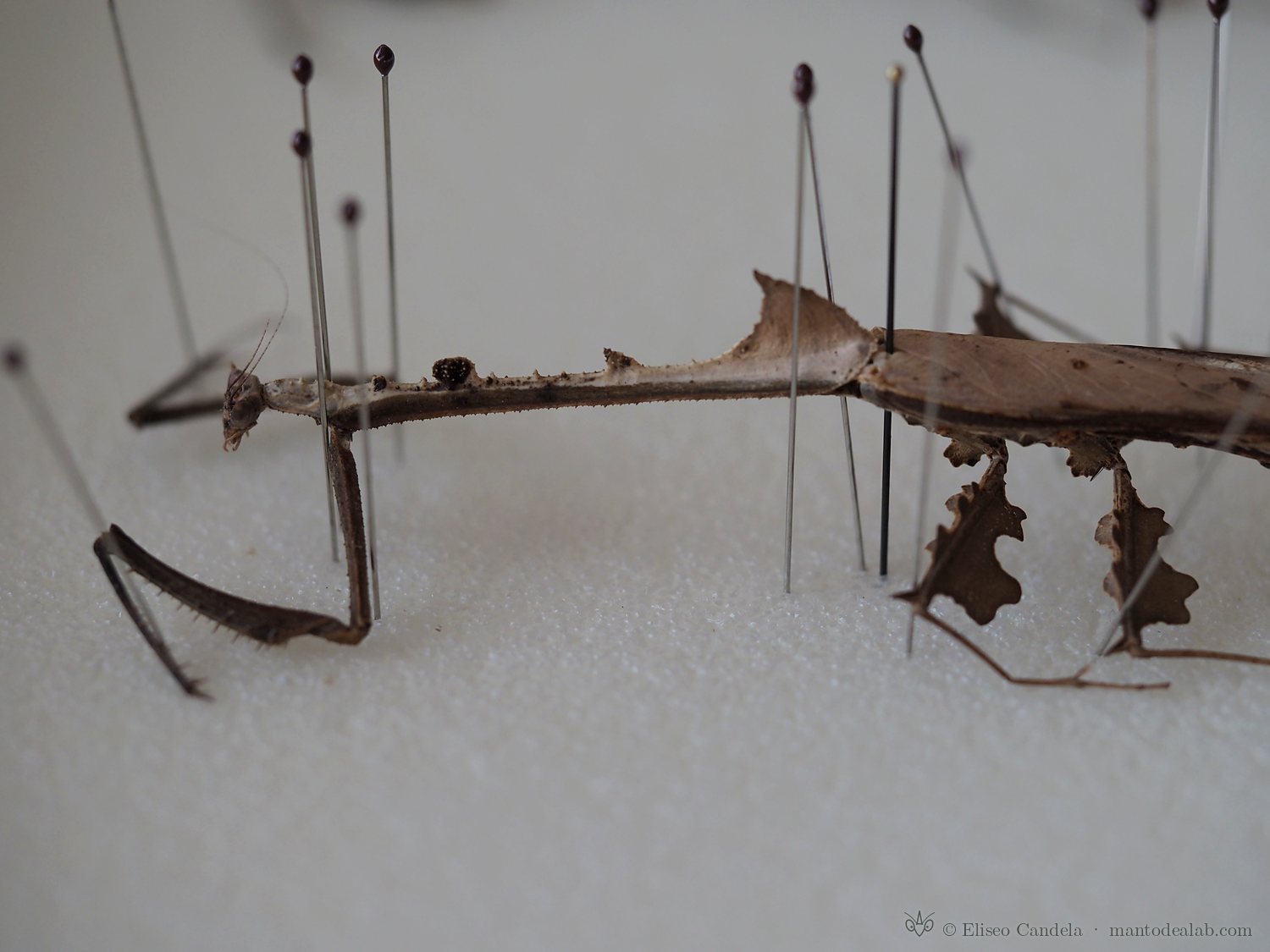
Museum mounting
Relaxing, pinning and spreading of dried or papered specimens: legs, wings and lobes set in a natural, symmetric dorsal posture, ready for a collection drawer or a display case.
Preservation
Advice on drying, labelling and long-term storage, and on protecting collections from pests, damp and light so that specimens last for decades.
Specimen repair
Reattachment of legs, wings, antennae and leaf-like lobes, and consolidation of cracked or fragile parts, keeping the original structure of the specimen.
From the cabinet
Longer versions of the plates: specimens, literature and open questions.

One name, three forms
Three males of Toxodera hauseri Roy, 2009 from Borneo, West Java and Peninsular Malaysia all key out to the same species. One of them, to my eye, looks like something else.
Read the note →Papers & descriptions
New work on the taxonomy and natural history of Toxoderidae is currently in peer review. Links to each paper will appear here as soon as they are published.
Write to the lab
Identifications, consulting, specimen work, talks or prints. For an identification, attach a clear photo and tell us the locality if you know it.
Or write directly to hola@mantodealab.com
New plates, first
One short email when a new series, paper or guide is out. Subscribers get early access and launch prices.
By subscribing you accept the privacy policy. Unsubscribe anytime.